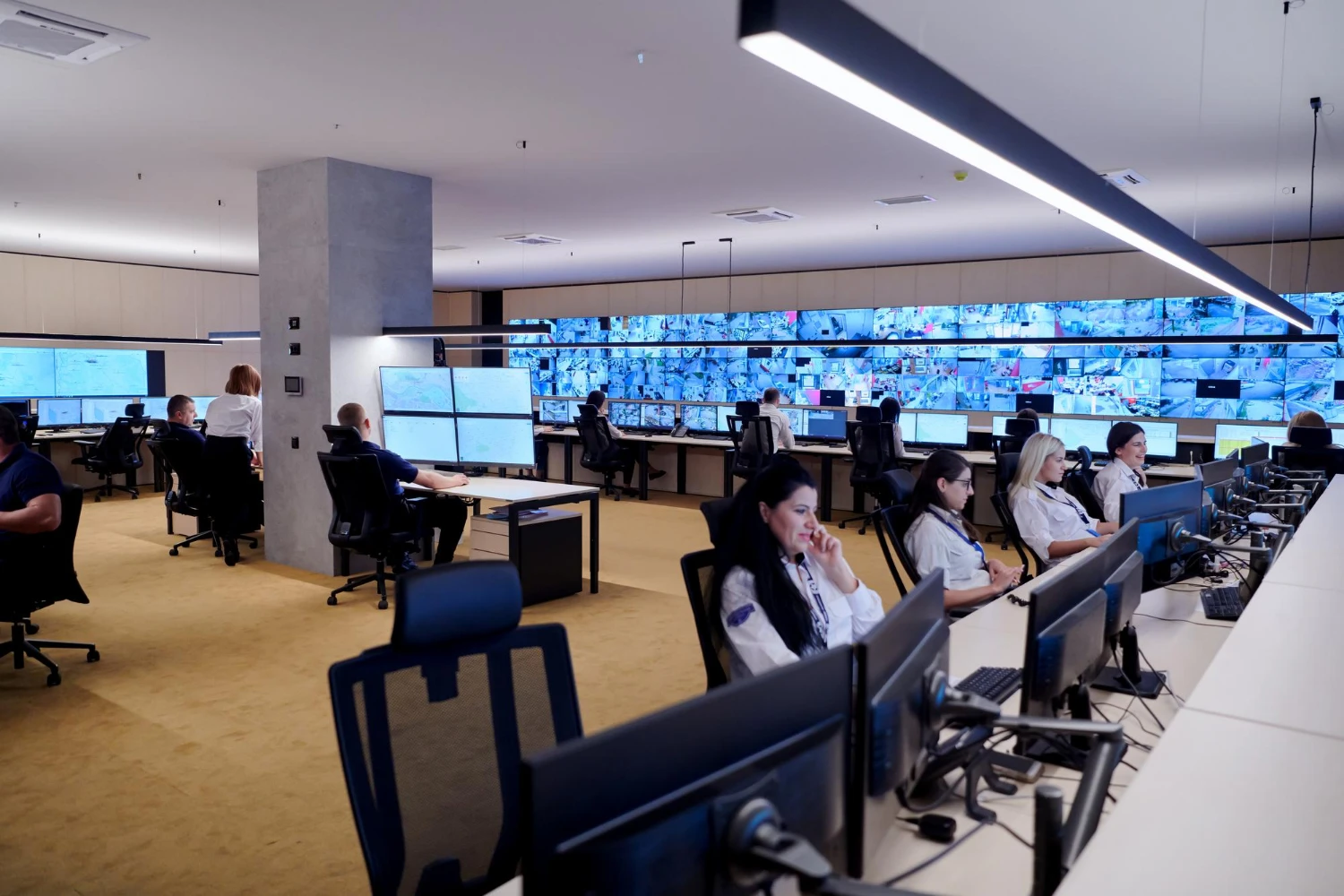
Operational Visibility
Command and Control Center
A unified operational command hub for real-time national visibility and response.
Why It Matters
Centralized Intelligence
Governments and public institutions are responsible for systems and services that must operate continuously. Without a modern command center, organizations face fragmented information, delayed awareness, and inconsistent response.
What It Delivers
Complete Monitoring
A complete environment for monitoring, coordination, and response across mission-critical services.
Core Value
See clearly. Decide faster. Respond together.
A Command and Control Center gives decision-makers and operators one shared view of critical operations.
Real-time situational awareness
Unified monitoring across systems
Faster incident escalation
Improved leadership visibility
Coordinated communication
Better resource allocation
Stronger accountability
Key Benefits
Built for Operational Excellence
Real-time Visibility
Centralize data, alerts, video feeds, and system health into one operational view.
Faster Response
Use structured workflows and escalation rules to respond quickly and consistently.
Multi-agency Coordination
Enable ministries and response teams to work from shared information and procedures.
Improved Decision-making
Give leadership accurate, timely, and contextual information during crisis events.
Stronger Accountability
Maintain logs of incidents, decisions, actions, timelines, and outcomes.
Operational Resilience
Support continuity of operations by improving preparedness and response readiness.
Capabilities
Mission-Critical Command
Comprehensive tools for high-pressure operational environments.
Command Center Design
Physical and digital planning: room layout, workstations, video walls, and redundancy.
Incident Management
Categorization, assignment, escalation, tracking, and post-event review workflows.
GIS Visualization
Interactive map-based display of incidents, assets, field teams, and infrastructure.
Audit & Reporting
Action logs, performance metrics, and after-action reviews for improvement.
Why Governments Choose Us
Coordination & Visibility
Our approach ensures that leaders understand what is happening, operators know what to do, and agencies coordinate effectively under pressure.
Implementation
Operational Readiness
From command strategy to full deployment and handover.
Assessment
Reviewing monitoring processes, workflows, teams, and response challenges.
Design
Defining room layout, technology architecture, and resilience needs.
Integration
Identifying data sources, security platforms, and agency systems to connect.
Deployment
Implementing workstations, display systems, and monitoring views.
Workflows
Defining incident categories, escalation paths, and playbooks.
Training
Training operators and leadership to manage daily and critical incidents.
Improvement
Refining dashboards and procedures based on operational experience.
Get Started
One command view for critical operations
Deploy secure, scalable, and interoperable command centers ready for real-world missions.